

Key Takeaways
Migrant food stories linger long after the campfire has faded. They weave together the flavors of ever-moving lives, the gentle companionship of a camp dog, and the rich tapestry of meals forged in untamed places. These moments go far beyond recipes, inviting us to savor not just what rests on our plates, but also the stories, landscapes, and relationships that season every bite in unexpected ways.
Embrace the beauty of meals shaped by the road. Campfire cooking among migrants spins a tapestry of flavors from distant homelands, adapting to what nature offers and what the heart carries from place to place.
True connection comes alive where food and companionship meet. Sharing simple food with a loyal camp dog transforms eating into a comforting ritual, anchoring travelers in warmth and presence, even when the path ahead is uncertain.
Wilderness meals become living memories. Against open skies and the crackle of fire, each bite is infused with the memory of lands crossed, people encountered, and landscapes that impart a sense of belonging to every ingredient.
Stay Sharp. Stay Ahead.
Join our Telegram Channel for exclusive content, real insights,
engage with us and other members and get access to
insider updates, early news and top insights.
 Join the Channel
Authenticity thrives in imperfection. These food stories celebrate resourcefulness and invention. Here, missing ingredients, smoky flavors, or roughly sliced bread become symbols of resilience and humble honesty.
Campfire meals become a crossroads of culture. The act of sharing food, however modest, becomes its own universal language, inviting empathy, understanding, and shared awe to bridge divisions between strangers, animals, and wild places alike.
A camp dog’s quiet company adds soulful comfort. Beyond practicality, the dog is a silent observer of every chapter, offering protection and a gentle assurance that no journey is entirely solitary.
Within these migrant food stories, every campfire meal is an invitation: to connect with the natural world, to feel at home wherever we stop, and to let the shared act of eating kindle a sense of belonging. When we look deeper, the glow of the fire reveals the flavors and tales that truly nourish the soul.
Introduction
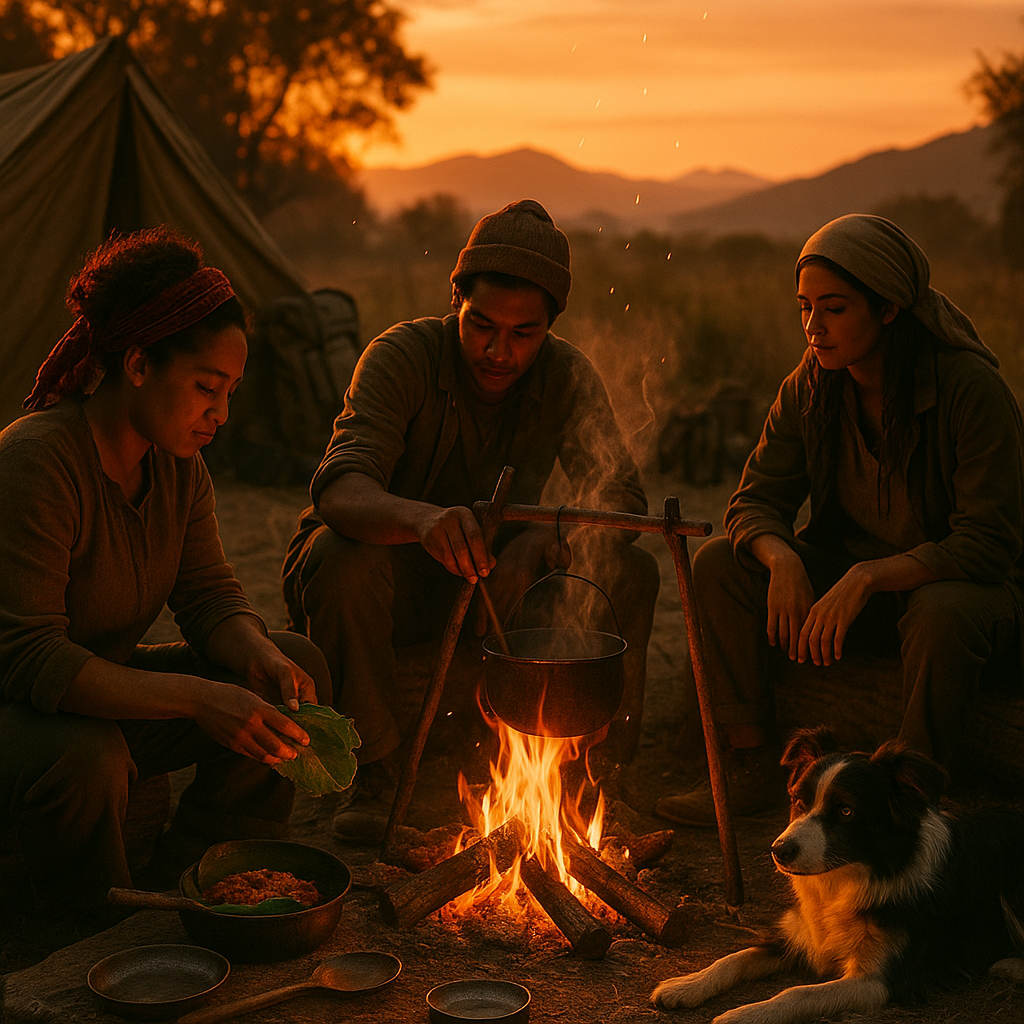
Steam rises from a worn tin mug, curling with the aroma of woodsmoke and something delicious simmering just beyond the campfire’s glow. In the quiet between stories, a camp dog settles nearby, eyes mirroring the flame and the tapestry of journeys stitched into every migrant food story. Here, meals become much more than sustenance. They are recollection, grit, and surprising companionship, all woven together beneath a great open sky.
Every mouthful draws from distant homes and wild landscapes, shaped by whatever the road gives and what each traveler carries within. These humble campfire meals (especially with a patient dog at your feet) turn into rituals of connection, grounding wanderers in much-needed warmth, belonging, and the honest company that only a genuine meal, shared outdoors, can provide. Come gather close to the fire as we discover how these stories and flavors feed far more than hunger.
The Universal Language of Migrant Food Stories
Throughout human history, people on the move have carried more than belongings; they have brought entire culinary traditions, adapting treasured recipes to new surroundings while preserving the spirit of home. Migrant food stories encapsulate these sweeping human experiences, especially when shared beside a flickering fire with a steadfast dog by one’s side. The combination of food, fire, and companionship forms a powerful nexus (memory, identity, and connection) that processes beyond words and borders.
The Significance of Food in Migration Journeys
As individuals journey from place to place, food becomes far more than daily fuel. It transforms into a portable slice of a homeland, an edible act of holding onto identity and memory. For those uprooted from familiar ground, recreating childhood recipes becomes an act of self-preservation and an act of hope. The simple taste of a beloved dish can transport someone across oceans and years, offering comfort during the uncertainties of travel or displacement.
Every recreated dish becomes a brief return home: a sensory lifeline connecting past and present.
For many, food traditions also become inheritance when material wealth is out of reach. Recipes shared orally carry family histories, ancestral wisdom, and hard-won survival skills across generations and borders. In this way, edible heritage can become the strongest tie to cultural roots, especially for children growing up balancing two worlds in a new land.
Campfire Cooking: Adapting Traditions in the Wilderness
The flicker of a campfire harks back to our earliest nomadic ancestors. It’s a primal convergence of necessity and tradition. For migrants forging new paths across wild landscapes, fire returns as both necessity and solace. The campfire is not just warmth or utility; it becomes a temporary hearth, transforming any clearing into a fleeting home.
Timeless Techniques Spanning Cultures
Shared across continents, migrant food stories reveal surprising similarities in makeshift cooking approaches. The practice of wrapping food in leaves or foil and resting it in coals can be found in Southeast Asian banana-leaf parcels and countless other traditions. These timeworn methods seal in moisture while inviting the gentle gift of woodsmoke, a flavor only the land and open sky can give.
Resourcefulness defines campfire cuisine. Travelers have long fashioned cooking vessels from birch, pine, or whatever was at hand, a skill gleaned across lifetimes. Such ingenuity, born of necessity, keeps both family and culinary heritage alive as tradition adapts to circumstance.
Cooking beside a campfire is a full-sense experience: the hiss of sap, the scent of resin and smoke, the sight of glowing embers, and the tactile rhythm of stoking flames. This immersive act carves deep grooves in memory, which is why so many wilderness meals become touchstones, remembered long after the journey has ended.
Wrapping food in leaves enables travelers to preserve moisture and infuse dishes with earthy flavors, demonstrating creative resilience found in many outdoor culinary traditions.
Dishes Shaped by Creativity and Circumstance
Iconic foods spring from the campfire out of inventiveness as much as tradition. Middle Eastern flatbreads, Russian fish stews like “ukha,” and one-pot wonders across the globe balance nourishment with what’s on hand. “Ukha,” for instance, is built around fresh-caught fish, producing a broth as clear as the rivers where it’s made. It’s a snapshot of place and journey.
Stay Sharp. Stay Ahead.
Join our Telegram Channel for exclusive content, real insights,
engage with us and other members and get access to
insider updates, early news and top insights.
Join the Channel
In Mexico, barbacoa is a traditional pit-cooking method: meat wrapped in agave leaves, left to cook slowly in a hole dug in the earth and heated with wood and hot stones, for 8 to 10 hours, as Mexico’s consumer agency Profeco documents in Hidalgo.
Such shared meals are structured by nature’s own pace: gathering wood, tending flames, waiting for just the right embers. These rituals invite both conversation and pause, transforming even makeshift cooking into a moment of togetherness. Around this fire, migrant food stories are passed from one wanderer to another, binding new and old worlds.
Beyond culinary heritage, these techniques and innovations have inspired the evolution of outdoor meals in other spheres, such as backcountry recreation, eco-tourism experiences, and sustainable travel adventures, where authenticity and simplicity are highly prized.
The Role of Camp Dogs in Migrant Journeys
In nearly every account of migration and campfire life, the figure of the camp dog appears quietly but persistently. These dogs bridge the worlds of work and kinship. They are faithful companions and watchful guardians whose presence softens loneliness and heightens security. Their role is not only practical, but deeply emotional, shaping how migrants experience the unknown.
Dogs: Steadfast and Soulful Companions
While human relationships may be complicated by misunderstanding, distance, or cultural separation, the bond between a traveler and a camp dog is beautiful in its directness. Amid shifting landscapes and uncertain tomorrows, a dog’s presence can feel like home itself.
Science affirms what stories suggest: a 2003 study found that positive interaction with a dog lowers the stress hormone cortisol and increases the body’s own natural mood-boosting chemicals, such as oxytocin and dopamine.
Camp dogs also provide continuity, joining every new chapter and place into a single shared story. In countless migrant food stories, dogs are named as silent witnesses, their steadfast presence linking moments that might otherwise feel fragmented or unreal.
For those interested in honoring animal companions along the journey, discover how shared rituals can create comforting farewells in the guide to campfire dog meals.
Sharing Food: Trust Forged by the Fire
Breaking bread with a camp dog is more than feeding; it is a gesture of deep kinship. Across cultures, giving food is an act of trust and care. To share a meal with a dog elevates them to family, an acknowledgment of interdependence and mutual respect.
In many places, food rituals recognize the partnership between traveler and dog, strengthening a bond that can defy the harshest landscapes.
A camp dog’s nearness also creates a secure boundary, allowing migrants a rare moment to relax and truly savor their food.
Dogs also serve as protectors in wild spaces, alerting to danger in new environments, whether on migrant routes, rural farms, or nomadic camps across continents. Beyond practicality, their presence brings softness. It’s a reminder that even in untamed places, companionship can bloom.
Food Memories: Taste and Smell as Keepers of Identity
Among all the senses, taste and smell reach most directly into memory, stirring emotions and stories that might otherwise remain silent. As people move across the globe, food becomes an anchor, a way to hold onto the meanings of home, even in the most distant places.
The Depth of Sensory Remembrance
Food is memory you can taste, and scents are triggers for entire emotional landscapes. Migrants often speak of how one aroma (a little za’atar in the air, the waft of roasted coffee, the tang of pickled herbs) can carry them back to childhood kitchens, family celebrations, or sacred holidays, no matter where they stand.
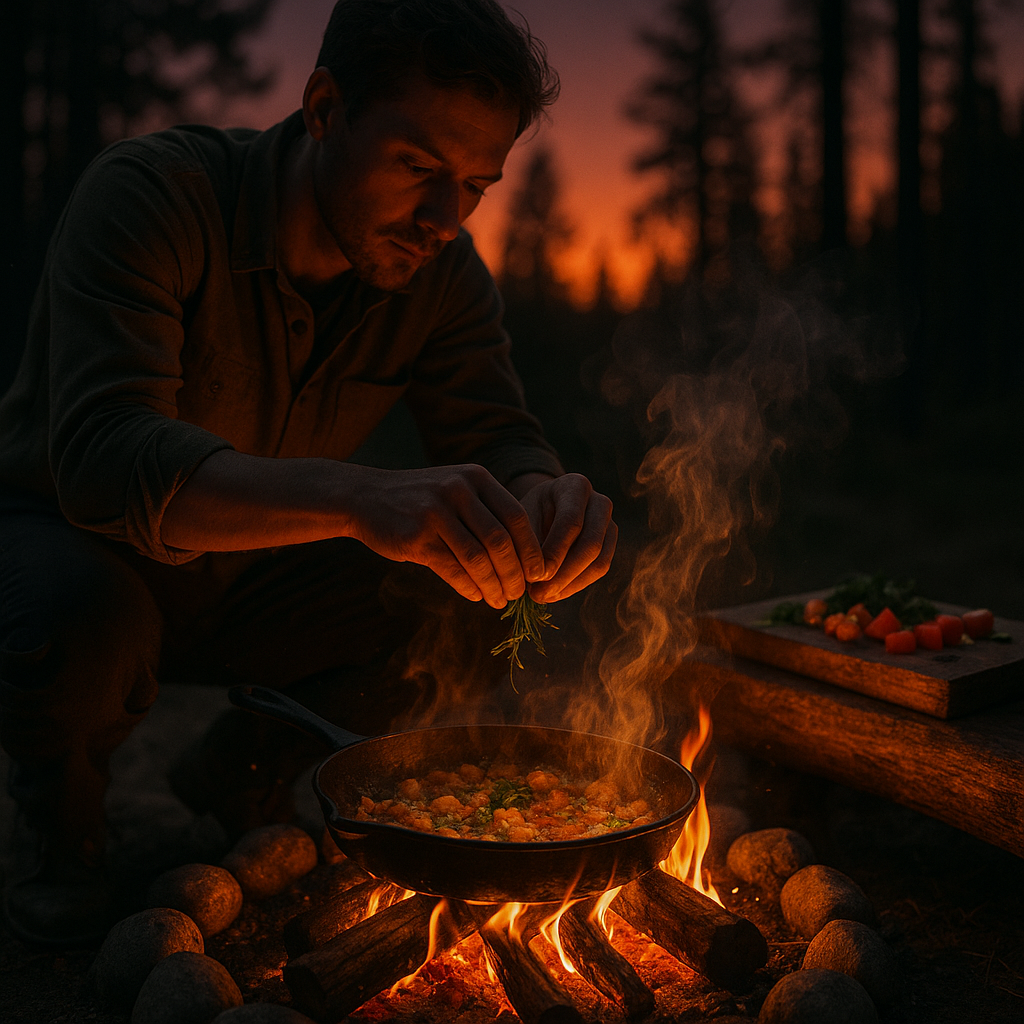
For families far from home, the scent of herbs toasting over fire can conjure whole rooms and faces from long ago, building an emotional landscape in unfamiliar forests. This olfactory transport brings continuity to lives uprooted, letting taste and scent serve as the strongest ties to identity.
Other senses also play their part. The muscle memory that comes from rolling dough or stirring a familiar pot lingers even when visual memories have blurred. The hands remember what the eyes might forget, and this embodied wisdom keeps whole traditions alive across generations.
For a deeper exploration of how outdoor cooking rituals evoke memory across generations, see how generational recipes carry emotional meaning at the campfire.
Recipes That Nourish and Evolve
Migration means constant adaptation, and recipes shift in response (replacing one herb for another, learning to coax flavor from whatever can be found). Italian families settled in the Americas learned to reinvent old dishes with new ingredients, creating Italian-American food that keeps the bone structure of heritage while shaping it to new surroundings. Every well-loved adaptation records not just what was left behind, but also what was found along the way.
This creative evolution is mirrored in other fields. In environmental science, recipes for resourceful living, such as solar-cooked meals in remote settlements, become vernacular knowledge. In education, the blending of culinary traditions helps create multicultural learning experiences and support for students of diverse backgrounds.
Conclusion
Migrant food stories are living testaments to the resilience, ingenuity, and longing at the heart of every journey. Around the warm circle of the campfire, with faithful dogs curled close, food preparation transforms into a ritual of remembrance and adaptation. The shared meal, shaped by whatever can be found and infused with love and story, becomes a map, marking not just the route traveled but the emotional landscape crossed along the way.
These meals offer so much more than nourishment. They are bridges back to lost homelands, to the faces we miss, and to the sense of belonging that only food infused with memory can provide. In sharing food across language, culture, or even species, we affirm that hospitality can exist everywhere, and that home is as much a feeling as it is a place.
As we look to the future, let us recognize and celebrate the transformative power of food stories, whether they unfold beside a campfire under foreign stars, in bustling urban gardens tended by new arrivals, or in shared kitchens where cultures meet and mingle. The next era of culinary storytelling will belong to those who honor both tradition and invention, weaving together curiosity, respect, and authentic connection in every meal they share. The real invitation is not just to witness these migrant feasts, but to participate in them. Let each flame and every bite reveal new flavors, new friendships, and the stories that will shape tomorrow’s world.
For further insight into how memories and meaning are preserved through food and flame, explore the science and stories behind smoke scent memory around the campfire.


Leave a Reply