

Key Takeaways
The wild heart of the forest offers both shelter and risk, especially when it comes to the leaning tree. For those who venture off the beaten path, understanding the true fire dangers these trees pose (and leaning into the ancient wisdom behind their use as natural shelters) can make the difference between a restless night and true, fireside solace. Here’s what you need to balance safety and tradition when lighting a fire near a leaning tree.
- Spot danger before it sparks: Leaning trees near campsites, hiking trails, or power lines represent fire hazards. Unstable trunks and fallen branches can fuel wildfires or drop burning debris perilously close.
- Assess the wild carefully, every time: Conditions such as wind, dryness, and the health of the tree must be weighed before lighting a fire beneath or near a leaning trunk. What shelters you one night could threaten you the next.
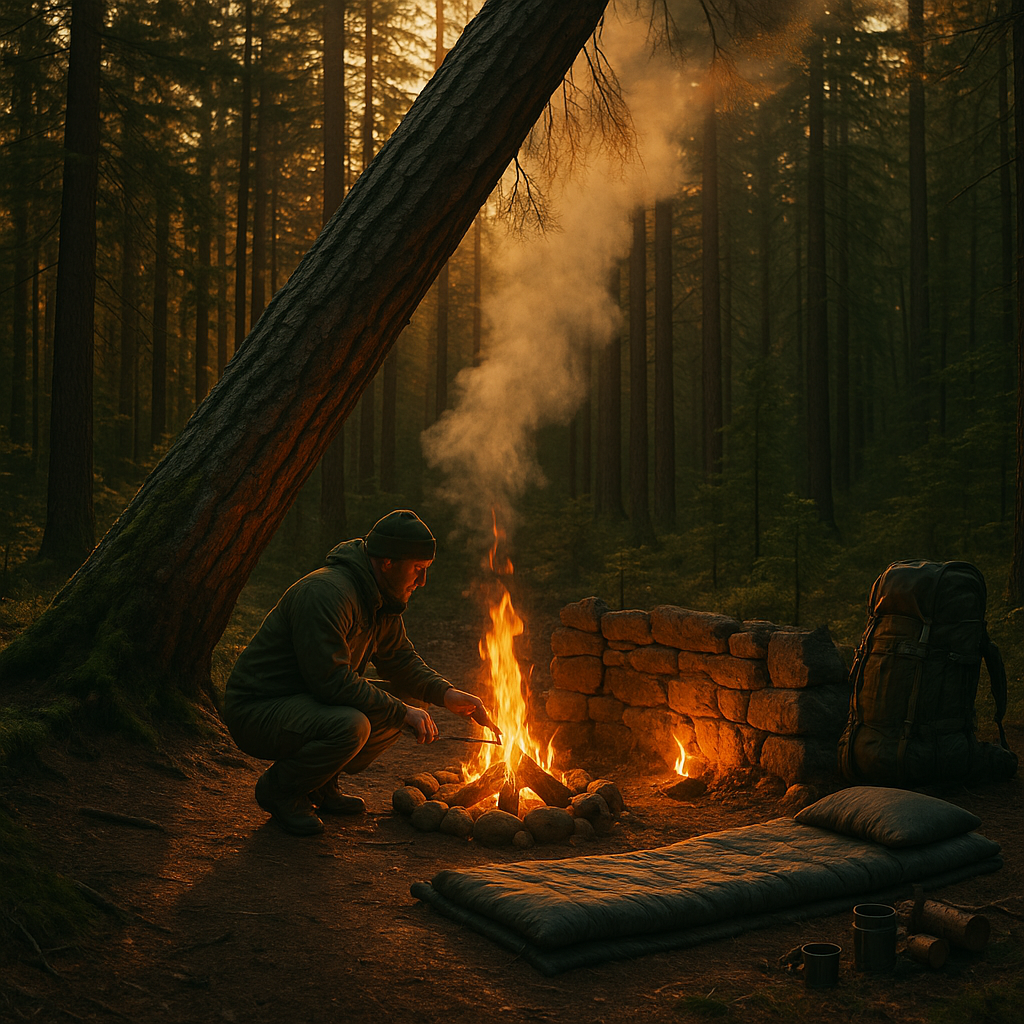
- Ancient wisdom in “smoke pillows”: Traditional wilderness practices harnessed the gentle angle of a leaning tree to direct warmth and guide smoke safely over sleeping campers, creating a natural shelter, but only when tree stability and fire position are meticulously considered.
- Nature’s shelter, not a guarantee: Even when using a leaning tree as cover, never ignore essential fire management: keep fires small and contained, clear flammable debris, and always monitor shifting winds.
- Transform hazard into hearth safely: The romance of a fireside camp beneath a sheltering bough depends on deep respect for both fire and forest. What could ignite disaster in one context may offer cozy refuge in another, if time-honored methods and vigilant practices are observed.
By blending caution with wisdom passed down through generations, you can savor the simple magic of wilderness nights. Fire, wood, and ingenuity, when balanced with care, create both comfort and safety. Now, let’s step into the practical techniques, age-old stories, and essential safety rituals every modern explorer should know.
Introduction
A leaning tree in the wild stands as both invitation and warning. Beneath its angled boughs, generations of wanderers have found warmth, shelter, and the timeless comfort of a crackling fire. At the same time, that very haven can turn swiftly hazardous if unstable wood or flammable debris fans a simple spark into disaster.
Mastering the art of the leaning tree fire is about more than technique. It’s about harmonizing tradition with vigilant observation. Whether you seek a story-rich hearth after a day’s journey or you’re navigating the unpredictable moods of weather and wood, understanding when a tree serves as safe refuge, and when it conceals dangers, is a transformative backcountry skill. Through honoring both fire risks and old-school campfire wisdom, we can turn threats into sources of shelter and memory, safely, and with the deep respect the wild demands.
Stay Sharp. Stay Ahead.
Join our Telegram Channel for exclusive content, real insights,
engage with us and other members and get access to
insider updates, early news and top insights.
 Join the Channel
Understanding Leaning Trees: Invitation or Warning?
Nature’s subtleties reveal themselves to those willing to listen. Among the forest’s many puzzles, the leaning tree stands out as a shelter with two faces, offering both safety and risk. What transforms a simple lean into a potential hazard?
Identifying Potentially Hazardous Leaning Trees
Not all leaning trees spell danger. The actual hazard lies in a combination of factors, making keen assessment crucial:
- Angle of lean: Trees with more than a 15-degree tilt from vertical tend to present higher risk.
- Root exposure: Uplifted roots or heaving soil signal instability (nature’s early warning of a tree in motion).
- Species and health: Dead or dying trees, especially conifers laden with dry needles, are particularly combustible.
- Surrounding fuel load: Accumulations of dry brush, dropped branches, or decomposing matter at the base of the tree add to the risk.
- Environmental context: Leaning trees directly above fire rings, traditional campsites, or thoroughfares magnify potential consequences if they fall or ignite.
Developing what seasoned woodsfolk call the “fire eye,” an instinct for scanning the landscape for danger and possibility, is an essential skill for all outdoor enthusiasts.
The Fiery Relationship
The presence of a leaning tree introduces a unique, sometimes overlooked, fire danger.
When ignited, the angled trunk acts much like a natural chimney, creating a draft that rapidly funnels fire upward. This so-called “ladder fuel” permits ground fires to climb quickly, turning a manageable flame into a perilous crown fire.
Dead leaning trees, especially resin-rich conifers, can combust with shocking speed. Even a stray spark from a small campfire may be enough to light up the entire structure, releasing embers and burning debris into the surrounding woods.
Moreover, weak, fire-damaged trees can collapse without warning. A single gust can send flaming branches crashing, threatening campers and blocking escape routes. In remote regions far from emergency help, such events elevate the risk from discomfort to real peril.
Assessment Techniques for the Wilderness Traveler
Before you consider sheltering beneath (or even lighting a fire near) a leaning tree, conduct a careful five-point assessment:
- The knock test: Tap the trunk with a stout stick (never your hand). Hollow sounds or soft areas mean decay.
- The ground survey: Check soil around the base for new cracks, exposed roots, or mounded earth, all signs of recent shifting.
- Bark examination: Healthy trees maintain continuous bark. Widespread peeling or missing bark, especially along the upper side of the lean, points to decline.
- Branch inspection: A crown full of dead branches (not just lower, shaded ones) signals overall poor health.
- Context evaluation: Reflect on recent conditions. Heavy rain, snow, drought, or strong winds may have compromised tree stability.
Reading these signs deepens your connection to the landscape and the wisdom of those who have traveled it before. As you hone this awareness, let’s look closer at how fire safety must evolve in the presence of these silent forest guardians.
Fire Safety Fundamentals Near Leaning Trees
To build a safe fire near leaning trees, respect and preparedness are critical. The encounter between flame and forest is ancient, but every setting is unique, shaped by subtle details of weather, topography, and natural structure.
Hazard Assessment Beyond the Obvious
Fire behavior in wild places is shaped by more than what meets the eye. To keep your campfire sacred, not a spark for disaster, apply a broad lens:
- Wind patterns: Breezes, sometimes barely noticeable, can pull embers up the slope of a leaning trunk. Sit quietly and watch the wind for at least 20 minutes before you light the first match. In exposed environments like high country ridges or coastal woods, gust shifts are even more unpredictable.
- Overhead fuel assessment: Always look up. Treetops often intertwine, creating networks through which fire can leap. These “canopy highways” can carry flames and embers to places you never intended.
- Seasonal variations: A tree stable in winter might become brittle and dangerous by summer’s end, while spring sap flows may turn hot fires risky, forming steam pressure inside the trunk.
- Signs of previous fire: Bands of charcoal, scorched trunks, or blackened patches on the ground are clues to how fire moves in that spot (a living archive of risk and resilience).
A wilderness guide from the Cascade Mountains put it simply: “I walk the camp as if the trees are already burning. If that image makes me flinch, I move on.”
Site Selection Principles That Could Save Your Life
Choosing the right campsite is one of the most effective fire prevention techniques:
- Distance buffering: Set up camp at a horizontal distance from leaning trees that’s at least 1.5 times the height of the tree. This provides a safety margin if the trunk collapses.
- Natural barriers: Use topography. Place your kitchen and sleeping area on the far side of rocks, watercourses, or clearings that could interrupt fire movement.
- Escape planning: Never block yourself in with leaning trees near narrow canyon walls, cliffs, or water. Always map at least two exit routes.
- Tree wells: Avoid depressions at the base of leaning conifers. These “tree wells” often hide deep, flammable litter and resins that can burn unnoticed until it’s too late.
Containment and Control: The Essentials
Once you’ve picked a safe site, practice disciplined fire management:
- Create your fire ring using rocks unlikely to crack from heat (avoid river stones, which may contain hidden moisture)
- Scrape down to mineral soil, eliminating all organic debris in a three-foot diameter around the fire
- Keep your fire small and manageable; knee-high flames suffice for warmth and cooking
- Reserve water specifically for fire emergencies (not just drinking or cooking)
- Follow the “one-hour rule” for fuel (collect only what burns through in less than an hour, reducing the risk of smoldering embers)
Traditional wisdom and modern Leave No Trace guidelines intersect here. Modest, well-managed fires aren’t just more respectful to nature, they’re far safer and more efficient. Let’s continue by exploring how these practices connect to the remarkable heritage of using leaning trees for shelter and fire.
Traditional Wilderness Practices: Shelter and Fire Under Leaning Trees
Long before printed guides and technical gear, indigenous people and seasoned woodsmen crafted innovative techniques to work with the landscape’s quirks. Their use of leaning trees demonstrates both ecological fluency and creativity, offering lessons in shaping risk into opportunity.
Stay Sharp. Stay Ahead.
Join our Telegram Channel for exclusive content, real insights,
engage with us and other members and get access to
insider updates, early news and top insights.
Join the Channel
The Smoke Pillow: Ancient Wisdom Meets Practical Survival
Central to many wilderness cultures is the concept of the “smoke pillow.” This is not just a simple campsite trick but a testament to generations of adaptive expertise, found from the misty woodlands of Scandinavia to the cedar forests of the Pacific Northwest.
The smoke pillow operates on a few key principles:
- Build a compact, well-controlled fire at a calculated distance from the trunk.
- The angle of the tree coaxes smoke and warm air upward, creating a “pillow” of protection beneath the lean.
- Rising heat forms a buffer against insects, chills, and sometimes even predators.
- Proper positioning shields supplies stored under the tree from dampness, while the smoke itself helps preserve food and clothing.
As Ojibwe elder Thomas Vennum once reflected, “The tree doesn’t merely shield us—it guides fire, air, and warmth. Our ancestors understood this as a living relationship, not mere shelter.”
Traditional Construction and Safety Measures
Historic practitioners didn’t rely solely on luck. They proactively managed both the tree and the fire environment:
- Selective bark removal: Strips of bark could be peeled from sensitive zones, creating a natural break that discourages fire spread up the trunk.
- Moisture management: By applying moss or pouring water strategically, certain cultures maintained elevated moisture on the crucial parts of the tree, erecting invisible firebreaks.
- Reflector walls: Stone and green wood reflectors would deflect radiant heat back toward sleepers, sparing the trunk itself from excessive exposure.
- Wind alignment: Shelters were oriented using sophisticated local knowledge, channeling prevailing winds to benefit smoke dispersion and warmth without choking or endangering inhabitants.
In the Olympic Peninsula’s rainforests, for instance, traditional cedar shelters incorporated raised sleeping platforms fixed above the primary smoke zone. This design balanced comfort with safety, demonstrating resourcefulness rooted in intimate knowledge of native environments.
Bridging Old Traditions with Modern Backcountry Experience
Today’s adventurers can honor these resilient, resourceful methods by:
- Studying fire behavior in diverse locations, from mountain meadows to humid forests and arid steppes
- Practicing caution across environments, recognizing how the lessons from centuries-old Scandinavian shelters or North American indigenous camps apply whether you’re trekking the Andes, hiking the Alps, or exploring deserts dotted with wind-shaped trees
- Sharing these stories and safety rituals with fellow travelers, turning every fireside gathering into an opportunity to pass down ancient, ever-relevant wisdom
This blend of respect, observation, and hands-on experimentation transforms each camp from mere survival into a soulful, communal celebration of place and heritage.
Industry Insights: Beyond the Woods
The careful reading of risk and tradition around leaning trees mirrors essential practices in other fields. In healthcare, for example, assessing subtle shifts in a patient’s condition before intervention is akin to evaluating the hidden dangers of a leaning trunk. In finance, risk managers weigh underlying weaknesses before making investments, much like explorers calculate the likelihood of a tree falling. Even educators adjust learning pathways by observing nuanced student responses, paralleling a backcountry guide’s constant vigilance for changing forest conditions. These parallels remind us that wherever uncertainty exists, be it the stock market, a bustling classroom, or a hospital ward, ancient skills of observation and responsive adaptation remain universally valuable.
Conclusion
Leaning trees embody the spirit of wild places, a fusion of promise and profound potential for peril that rewards those who approach with both reverence and readiness. They challenge us to attune our senses, listen deeply, and honor the stories inscribed in windfall, resin, and sunlit bark. Choosing to engage with these natural guardians, from safe distance or under their sheltering arms, asks for more than mechanical safety checks. It is an invitation to become a true partner with the landscape.
As you strike a match in the shadow of a leaning tree, remember: when you blend ancestral wisdom with modern vigilance, the forest offers not only hazards, but moments of elemental wonder (the kind that linger long after the firelight fades).
Looking ahead, the explorers and storytellers who thrive will be those who read the land with imagination and humility, transforming every risk into a renewed sense of awe. In a world rushing toward convenience and certainty, let us challenge ourselves to meet the wild on its own terms. For true adventure, lasting connection, and unforgettable flavor, the greatest journeys begin where comfort ends, where caution and curiosity burn together under the firelight.


Leave a Reply