

Key Takeaways
- Honoring journeys through fire-forged recipes: Ash recipe journals capture recipes shaped by nomadic rhythms, tracing the paths of migration where food is memory, map, and homecoming all at once.
- Savoring simplicity in elemental cooking: Each entry celebrates meals stripped down to their essence, relying on smoke, ash, and the raw beauty of natural ingredients transformed under open skies.
- Preserving fleeting moments of taste and place: Recipes become living stories, woven from riverside mornings, mountain sunsets, and the laughter shared around a campfire, anchoring memory to each landscape.
- Blending culinary traditions from crossroads and campfires: Ash recipe journals mirror ancient routes and new horizons, bringing together flavors, techniques, and stories from fellow travelers and locals encountered along the way.
- Inviting connection with nature and community: Documenting meals outdoors encourages cooks to slow down, savor the surroundings, and infuse joy and gratitude into stoking embers, kneading dough, and sharing food.
- Capturing imperfection as a badge of authenticity: Burnt edges, uneven heat, and improvisation are embraced, celebrating the wonder of unpolished, real-world experience over glossy perfection.
- Transforming recipes into soulful narratives: Every ash-marked page tells a story. Tales of places discovered, challenges overcome, and the warmth of stories shared beside flickering flames come to life.
Ash recipe journals serve as companions for those who roam, blending the warmth of the hearth with the freedom of the horizon. Through stories penned in smoke and ash, they help us rediscover how every simple meal can become an epic of memory, place, and connection.
Introduction
In the quiet moments between sunset and stars, with a backpack’s weight on your shoulders and the scent of woodsmoke hanging in the air, stories are written not only with words but in the fleeting artistry of ash and flame. Ash recipe journals hold these stories close. Every fire-forged meal becomes both an unfolding map of wandering steps and a homecoming, capturing the restless pulse of migration and the comfort of belonging, wherever the horizon beckons.
Much more than collections of recipes, ash recipe journals are living archives where every smoky page weaves together cultures, landscapes, and memories into narratives to be shared beneath open skies. In wild places, simplicity reigns. Meals are stripped to their essence as laughter rises with glowing embers, and each imperfection becomes a marker of real adventure. These journals invite us to explore the trails they chart, to see how each ash-dusted entry binds taste and place, connecting hearts to the land and to one another.
Ash Recipe Journals: Documents of Fire and Movement
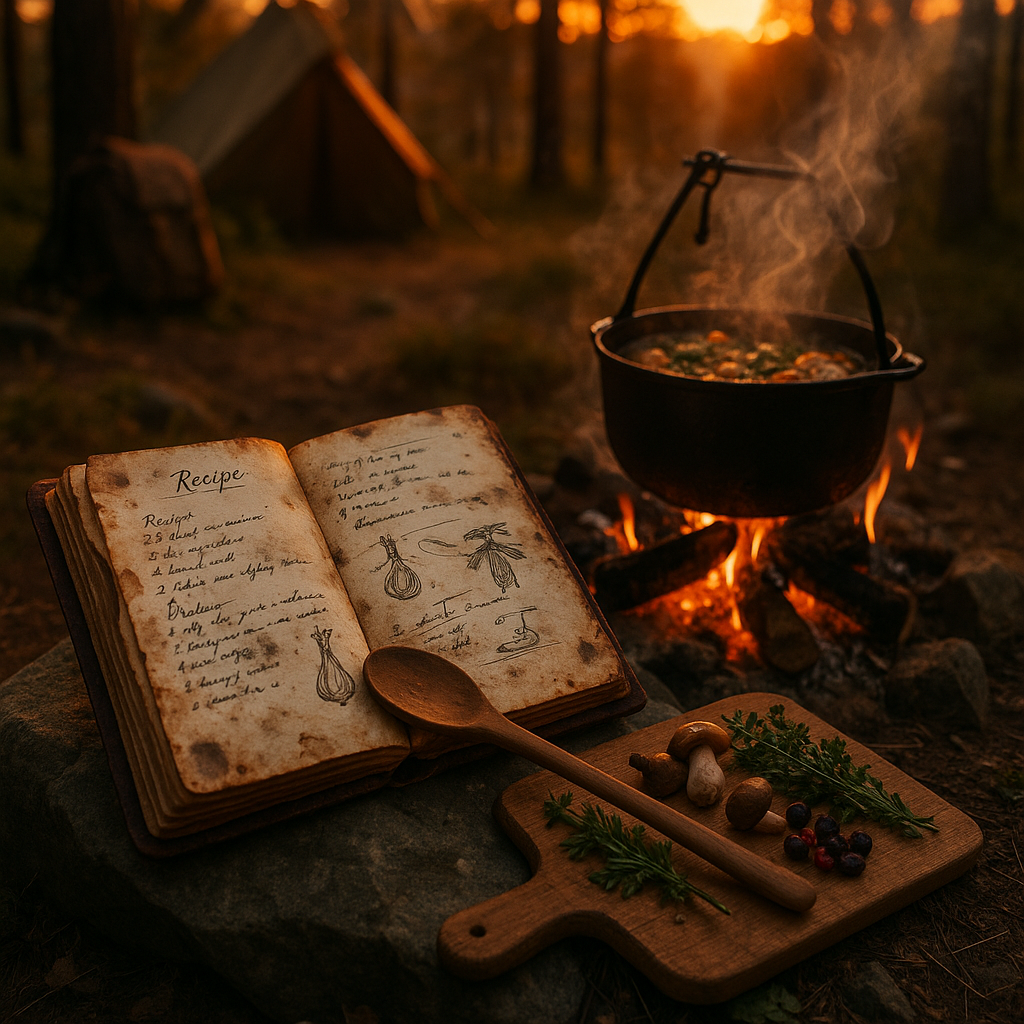
The magic of an ash recipe journal lies not simply in its recipes but in its tactile storytelling. This is a record of journeys inked on charred pages bound by twine, smudged with oil and carrying the soft odor of woodsmoke. These journals are not sterile collections of ingredients and steps; they are chronicles, etched in soot and memory, that capture the ephemeral wonders that occur when food meets fire out in the wild.
Stay Sharp. Stay Ahead.
Join our Telegram Channel for exclusive content, real insights,
engage with us and other members and get access to
insider updates, early news and top insights.
 Join the Channel
The Evolution of Nomadic Cooking Journals
Across centuries, travelers have found ways to remember their culinary experiences, sometimes hastily, sometimes with deliberate reflection. Margins in pioneer journals or explorer logs from the 1800s might note “buffalo prepared with wild onions” or “trout cooked on hot stones.” What began as practical survival notes evolved over time into intentional documentation. Food memories intertwine with the character of each journey.
Modern ash recipe journals build on these traditions, now blending pragmatic know-how with poetic insight, capturing not only the meal itself but the moment, the place, and the necessity behind each recipe. Unlike polished cookbooks with meticulous measurements, ash journals are comfortable with ambiguity. One entry from the Pacific Northwest reads, “Handful of foraged thyme, the amount that feels right.” In the Sonoran Desert, another notes, “Mesquite flames too hot tonight, will wait for deeper coals next time before using the cast iron.”
Far from only chronicling perfect outcomes, these journals celebrate the learning process. Errors, adjustments, and adaptations are cherished as much as successes. A journal entry recounts recreating a cherished bread recipe at 9,000 feet: “Third attempt finally worked. Doubled the water, halved the yeast, and surrendered to the mountain.” Here, wilderness is not just a backdrop but a teacher and an ingredient, shaping the journey of every cook.
Recipes in these journals become waypoints, mapping not just geography but the evolution of skill, taste, and resilience. Each dish anchors a memory to a specific time and place, reminding us how intimately food is tied to the landscapes we traverse.
Techniques of Fire and Adaptation
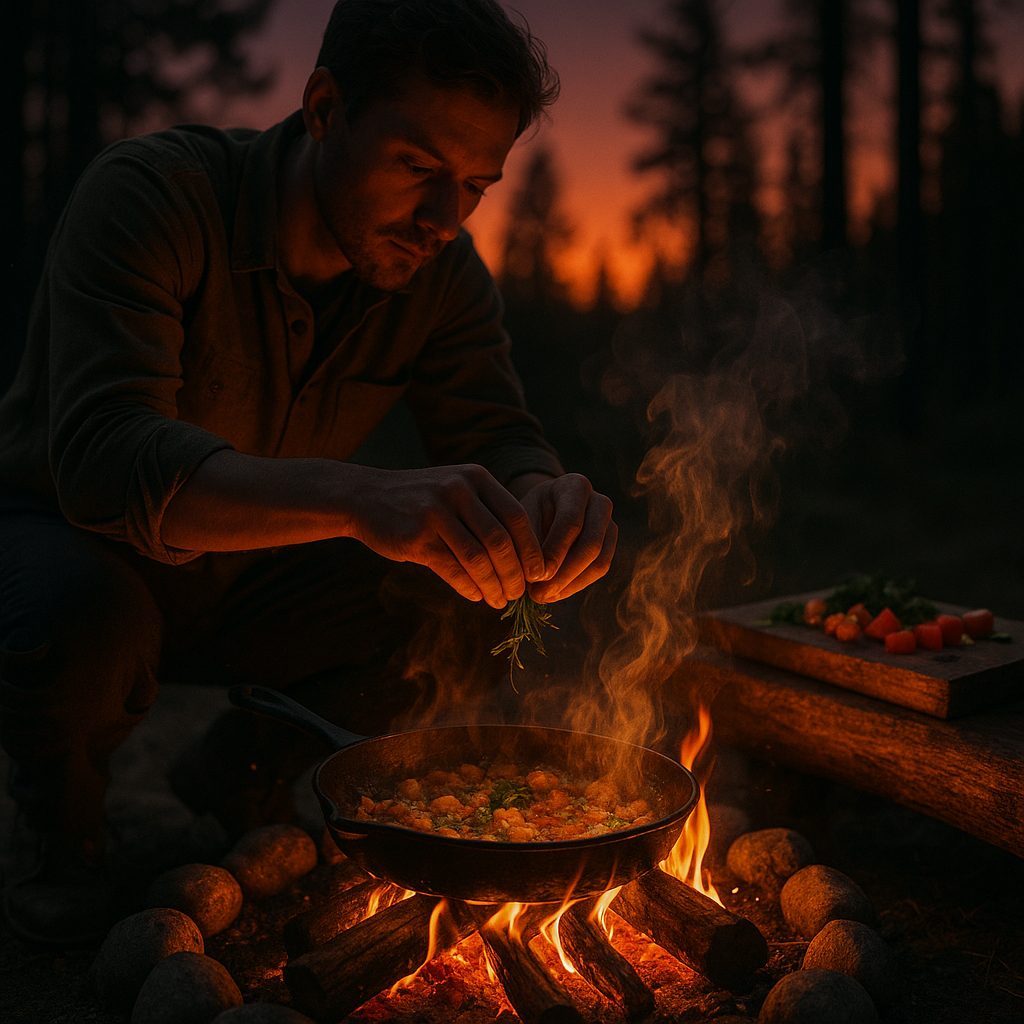
Digging deeper, the essence of every ash recipe journal is its deep documentation of firecraft. This is the true heart of wilderness cooking. Where home kitchens rely on predictable stovetops, the wild asks cooks to read the language of flames, respond, and adapt.
Fire Signatures Across Landscapes
Every environment provides its own palette for fire. Pine forests offer quick, hot flames, ideal for searing fish but requiring constant attention. An Adirondack journal notes, “Added small branches every three minutes to maintain heat. Trout skin crisped beautifully with a subtle resin fragrance.”
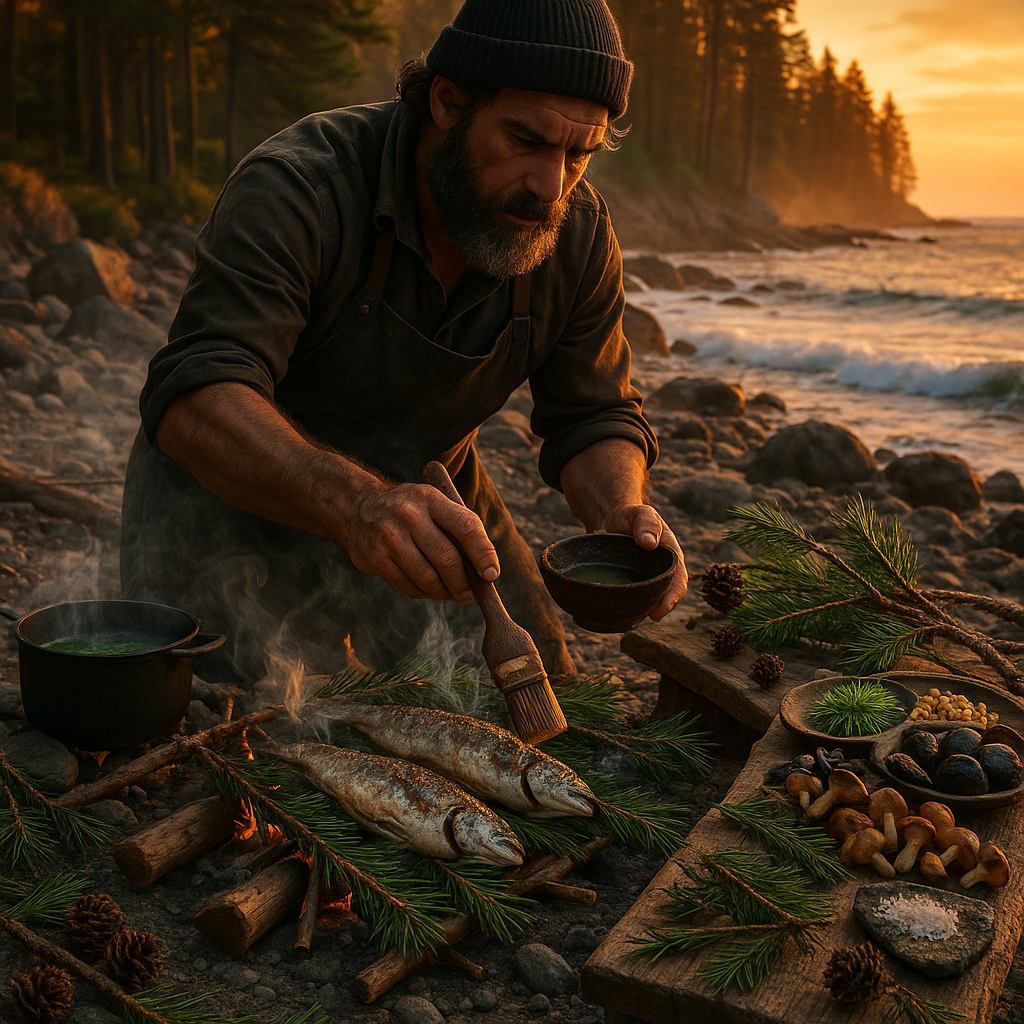
Desert landscapes, abundant in mesquite and oak, provide long-burning embers for slow cooking. “The deep sunset glow of mesquite coals transformed tough desert game into tender, smoky morsels over hours rather than minutes,” reports a southwestern entry. Coastal fires, fueled with driftwood, impart ocean minerals and a briny aroma to fish wrapped in seaweed. One Pacific Northwest writer describes, “Salmon, seaweed, and salt-driftwood embers. I tasted the sea twice over.”
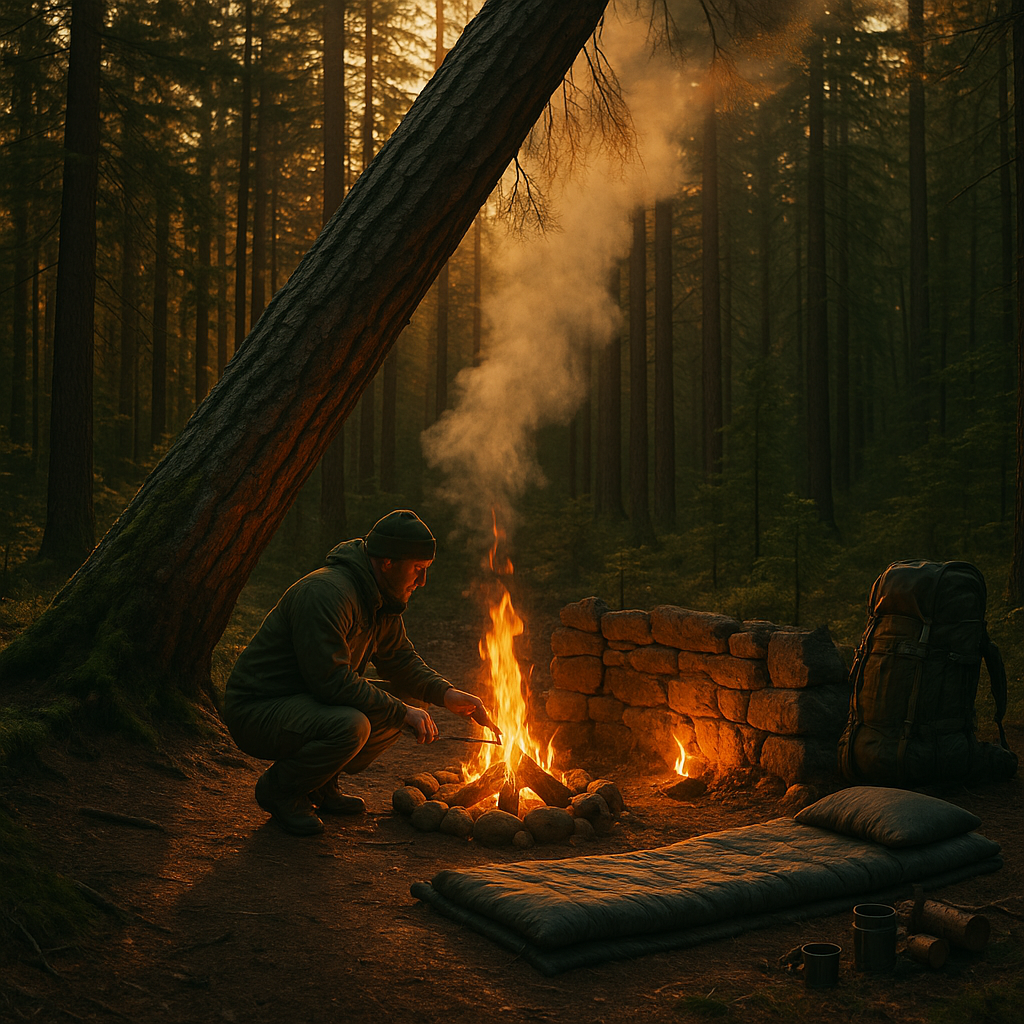
Devoted firecrafters learn their fires intimately, configuring stones or embers for multiple heat zones. “Built a stone horseshoe around the main fire. The left side for a mushroom stew to simmer, the right to keep coffee warm, and the direct center for quick-charring the day’s catch.”
Adaptation as Recipe Development
Ash recipe journals are extraordinary because they document not only planned triumphs but also impromptu adaptation. The wilderness rarely goes according to plan. Limited supplies, shifting weather, or an unexpected forest find demand creative thinking.
Unexpected rain may lead to improvising breakfast with oats and wild berries, buried and steamed beneath stones pre-heated by last night’s fire. “Not what was planned, but perhaps better,” one Scottish Highlands entry reflects. Lost or failed supplies often birth new local delicacies: a failed dough becomes a flatbread on hot rocks; unfamiliar mushrooms find their way into soups in place of missing vegetables.
Through these adaptive solutions, ash journals capture not only culinary ingenuity but also a mindset that values resilience over uniformity. Rather than delivering fixed results, these journals become handbooks for resourcefulness that outdoor adventurers, healthcare field teams preparing meals onsite, or environmental scientists working remotely can all appreciate. The wisdom contained in these pages offers guidance for responding to uncertainty. Whether preparing a fire-cooked meal on the tundra, feeding students on a field trip, or addressing unexpected changes in a busy hospital kitchen, there’s something there for everyone.
Adaptation in these records doesn’t solely apply to outdoor adventure. In professions as diverse as education (adapting resources in remote learning environments), marketing (responding to shifting consumer trends), or finance (navigating unpredictable markets), the spirit of responsive, creative thinking modeled in ash journals can lead to more resilient outcomes.
Migration Stories Told Through Food
As we transition from technique to narrative, ash recipe journals also record our deeper migrations. This is the culinary evolution that occurs as people and ingredients cross boundaries and blend.
Culinary Cross-Pollination in Wilderness Settings
Ash journals provide living proof that food is a universal language, constantly in translation. One hiker from Louisiana recounts making gumbo with young nopal cactus in the American Southwest: “No celery to be found, so switched to cactus. The desert’s gift changes everything. Not better or worse, just beautifully different.”
The wild fosters collaboration. Journals frequently tell of meals shaped by shared hardship or good fortune: “Three camps merged during a mountain storm. The Israeli couple taught us to cook flatbread on stones, and our Norwegian friend brought preserved fish. By morning, we’d invented a meal belonging to nowhere except the place we all became family.” In outdoor settings, traditional culinary boundaries dissolve as necessity and camaraderie become the hallmarks of new recipes.
This cross-pollination has relevance in various contexts. In healthcare, for instance, nutritionists might blend traditional healing practices with modern dietary requirements while working in remote clinics. Educators experimenting with cross-cultural curricula draw inspiration from the collaborative nature found in these fire-forged feasts. Even in business, teams formed through global partnerships can relate to this ethos, combining distinct techniques and ideas to yield solutions unique to their shared journey.
Stay Sharp. Stay Ahead.
Join our Telegram Channel for exclusive content, real insights,
engage with us and other members and get access to
insider updates, early news and top insights.
Join the Channel
Heritage and Memory as Portable Ingredients
Perhaps most moving, ash recipe journals document the act of carrying home along. Whether it’s recreating a beloved family recipe with local substitutions or infusing new experiences into old traditions, cooks honor heritage while adapting to the present.
“Made mother’s dumplings tonight using pine dust instead of pepper. Not the same, but as they steamed, I heard her voice,” writes a long-distance hiker, connecting taste to memory and love. Another traveler, far from home, makes wild oregano tea reminiscent of a father’s garden, bridging decades and continents.
This approach is mirrored wherever people blend personal history with their present. Public health professionals adapt meal plans for patients from diverse backgrounds, finance leaders integrate legacy systems into new markets, or legal professionals update old precedents for contemporary cases. Ash journals remind us that honoring our origins, even while adapting, fosters richer outcomes and deeper connections.
Such transformations lead to new culinary traditions that belong to the journey itself. “This stew I’ve been refining belongs to no single country,” writes one trekker. “It was born on the trail and tastes of everywhere I’ve been.” In a world where migration, travel, and cultural exchange are ever-present, this willingness to allow tradition to evolve becomes a universal story.
The Physical Language of Ash Journals
Moving beyond words, the very texture of an ash recipe journal conveys as much as its sentences or sketches. The physical details (browned corners, oil stains, weathered pages) hold a sensory archive of wild places and time spent under the sky.
Sensory Documentation Beyond Words
Each mark tells its own story. Coffee rings serve as maps, marking morning rituals by a lakeshore. Grease stains become abstract evidence of a particularly lively meal. Warped and rippled pages recall rainstorms, humid jungle mornings, or cooking close to a restless flame.
“The singed page happened during a Montana windstorm,” one writer observes. “I hunched over the fire to shield the flame. The burn marks recall the night more vividly than my words.” Some journals press wild herbs as bookmarks, sketch scenes of impromptu cooking rigs, or document tree bark textures found beside memorable meals.
This multisensory record echoes practices across different fields. In environmental science, hand-written weather logs capture nuances digital systems might miss. In finance, annotated charts show the impact of events over time, and in education, margin notes reflect a thought process as valuable as the final answer.
Ash journals thus become artifacts, connecting us to wild places in a way that picture-perfect cookbooks never could. Every imperfection (every warped page, smudged drawing, or accidental ash stain) serves as a testament to experience and authenticity.
Conclusion
Ash recipe journals are much more than bundles of stained paper; they are living artifacts that immortalize the wild spirit of cooking on the move, forging an unbreakable bond between place, fire, and food. Each entry (burnt page, treasured smudge, or aromatic fingerprint) records not only what was eaten but how resourcefulness, heritage, and unexpected meetings created unforgettable meals far from the routines of home. In these weathered pages, we find chronicle after chronicle of resilience, collaboration, and the beauty of imperfection. This is a manual not just for surviving, but for savoring the true taste of adventure.
The legacy of ash journals ripples outward. Their philosophy calls on us to look past perfect outcomes, to welcome adaptability and shared moments, no matter the industrial kitchen, boardroom, classroom, or riverside outpost. At a time when our lives are saturated with scripted perfection and sanitized experience, these journals invite us to embrace authenticity, carry our stories with us, and seek joy in the unscripted moments. Looking forward, the next era of culinary adventure (and perhaps of life and work itself) will belong to those who can not only adapt, but find wonder, connection, and meaning in the ashes and embers along the way. Let every meal in every landscape be a fresh canvas for memory, imagination, and shared humanity: food, fire, freedom.

Leave a Reply