

Key Takeaways
- Experience the untamed connection of forest and sea. Cooking in coastal pine settings unites the earthy green of pine needles with the briny rush of ocean air. This dynamic creates a flavor profile impossible to replicate indoors or in traditional kitchens, filling every dish with the memory-rich backdrop of wild places.
- Go beyond the pine nut: embrace the whole tree. Coastal pine cooking explores far more than Mediterranean pine nuts, using needles for teas, resin for aromatic infusions, pine wood for smoking, and even ash as an adventurous seasoning.
- Nature transforms into both kitchen and pantry. Foraging pine needles alongside tide-fresh seafood encourages cooks to gather what the season and landscape offer. Each meal becomes a direct reflection of what grows at your feet, grounding you in authentic, present-moment abundance.
- Outdoor techniques awaken every sense. Open-fire grilling, salt-baking on glowing stones, and the slow smoke from pine branches infuse food with the scents and sounds of wind, wood, and crashing waves. Cooking outside isn’t just about taste—it’s a full-body memory that lingers long after the last bite.
- Seafood finds new expression when paired with pine. Delicate fish like Mediterranean sea bass and plump shellfish shine when touched by pine-infused oils, zesty needle dressings, or the smokiness of woodland embers. The result is a harmony celebrating both coastline and canopy.
- The environment becomes an ingredient. Shifting weather, tendrils of woodsmoke, and the rhythmic crash of surf all shape the experience. Cooking outdoors in wild places means every meal is responsive; a living act, never twice the same.
- Each flavor tells a story of place and wilderness. Meals prepared where forest meets shore become tales of belonging and gratitude. They highlight the adventure of foraging, the comfort of the campfire, and the richness of gathering wild ingredients as the sun drops behind the trees.
Let these takeaways lead you into the heart of pine sea cooking. Here, nature’s pantry beckons just beyond your tent, and every meal becomes a living memory. Begin the narrative of the wild coast. Your journey toward flavor, adventure, and soulful simplicity is about to unfold.
Introduction
Smoke curls upward, weaving the syrupy sweetness of pine resin with the sharp, wild breath of the sea. This is the essence of pine sea cooking: a place where forest shadows rest against the shifting tides, and every meal becomes an invitation to savor not just food, but the very soul of the landscape. Pine needles steep into tea, seafood glistens with ocean salt, and every branch kindled on the fire deepens the memory, anchoring each bite in the drama of place.
Here, nature is both pantry and kitchen. The flavors you forage, the techniques you use, and the mood of the day all combine in dishes you’ll never recreate in an indoor kitchen. Meals become celebrations of wildness, adventure, and connection—a soulful feast for those willing to wander the coastal pines in search of their own taste of the world’s raw beauty.
The Essence of Pine Sea Cooking
The heart of pine sea cooking is its rare fusion of forest aromatics and ocean salinity, a culinary philosophy rooted where rugged pines lean into the restless surf. It is not only a choice of ingredients, but an invitation to make the environment an active participant in every meal. Resinous pine mingled with briny air conjures a sensory experience that can’t be found in any conventional kitchen.
Stay Sharp. Stay Ahead.
Join our Telegram Channel for exclusive content, real insights,
engage with us and other members and get access to
insider updates, early news and top insights.
 Join the Channel
The Terroir of Coastal Pine Forests
Coastal pine forests form a unique ecosystem. Salt-heavy winds sweep through the crowns of trees, infusing pine needles, bark, and cones with subtle elements of the sea. Whether wandering through California’s Monterey pines, Portugal’s wind-shaped maritime pines, or the resilient stone pines of the Mediterranean, you’re immersed in a world shaped by the dual forces of salt, wind, and earth.
These trees, sculpted by exposure to the elements, concentrate essential oils and aromatic compounds unlike any inland species. As a result, the pine found in these areas has an intensified fragrance: a blend of sharp citrus and grounding resin, all tinged with a whisper of ocean brine.
A simple walk through this borderland reveals shifting scents: the punch of pine, layered with the distillate of the surf, creating an ambient memory that naturally infuses whatever is cooked here.
Cultural Heritage & Traditions
Pine sea cooking is rooted in centuries of tradition among coastal peoples across the globe. In the Pacific Northwest of North America, Indigenous communities steamed oysters, mussels, and fish on beds of pine boughs, using the branches to preserve, flavor, and honor the land. Along the Mediterranean, fisherman grilled fresh catches over pine needles, letting the needles’ smoke create a protective cocoon that flavors the fish with gentle resin.
In Japan, autumn brings prized matsutake mushrooms, thriving near pines close to the coast—a delicacy that expresses the bond of forest and sea. Spanish fishermen on the Costa Brava wrapped their day’s haul in pine to grill over beach fires, infusing every bite with the forest’s essence. These traditions showcase a deep knowledge not just of survival, but of how to coax the best from nature’s gifts through resourcefulness and respect.
The passing of these skills from generation to generation is a testament to how environment shapes cuisine. Pine’s antiseptic qualities were once valued as much for preservation as for flavor, and today’s revival of these practices is a reflection of both culinary innovation and ancestral wisdom.
Foraging in Coastal Pine Environments
Foraging on the edge of sea and forest requires a slow, respectful mindfulness. These shifting landscapes, where pines descend toward the saltwater, offer an astonishing spectrum of ingredients if you know where and how to look.
Identifying Edible Pine Elements
When foraging, it’s essential to know your trees. Not every pine is palatable or safe. Choose varieties like stone pine (Pinus pinea), sugar pine (Pinus lambertiana), and pinyon pine (Pinus edulis). Their needles, nuts, and even pollen often hold the most culinary promise.
Look for the first flush of emerald-green needles in early spring. These tips are highest in Vitamin C and boast a lively, citrus tinge. Steep them into teas for a bracingly fresh drink or use them to flavor broths and marinades. Always collect sparingly, gently trimming from multiple branches so the tree continues to thrive.
Spring also offers pine pollen, a fine golden dust harvested by shaking male cones. Flavorful and rich in nutrients, it can be sprinkled over campfire bread, whisked into eggs, or used to thicken sauces, imparting a sweet, earthy undercurrent that speaks of the forest floor.
Though famous, pine nuts are only one gift from these trees. Those collected near the ocean (especially from stone pines) are larger and luxuriously buttery, revealing a lingering saltiness—a flavor woven by wind and tide.
Seasonal Sea Harvests
The coastline carries its own bounty. Spring’s low tides expose tender sea lettuces and crimson dulse, fronds that crunch with salt and minerality, perfect paired with pine-smoked seafood. Summer brings herbs like sea fennel and purslane, their salty tang marrying well with pine nut pestos and grilled shellfish.
When autumn rains moisten the earth, the forest floor explodes with mushrooms such as saffron milk caps and slippery jacks, which absorb both pine aroma and sea air. These mushrooms capture the spirit of the wild coast in their flesh.
Winter’s sparseness is deceptive. Now is the time for gathering pine resin (for aromatic smoking), mature cones for kindling, or rugged kelps battered by seasonal storms—ingredients that lend themselves to slow-cooked dishes and deep broths.
Sustainable Harvesting Practices
Conscious foraging honors the delicate ecology of the shore and forest. Harvest sparingly; never more than a tenth from a single area, and avoid overgathering any one plant. This sustains the ecosystem for wildlife and future generations.
Before collecting from the shoreline, check local advisories regarding water quality and shellfish safety, as some coastal areas face contamination. Choose healthy, vibrant trees and avoid overburdened or damaged ones. Forest and ocean creatures—birds, deer, and crabs—also depend on the season’s bounty, so share with care.
Stay Sharp. Stay Ahead.
Join our Telegram Channel for exclusive content, real insights,
engage with us and other members and get access to
insider updates, early news and top insights.
Join the Channel
True pine sea cooking is rooted in gratitude. By rotating your harvest spots and taking only what you need, you join the rhythm of the wild rather than disrupt it. That’s a key value at the heart of the adventure.
Essential Techniques & Methods
The beauty of pine sea cooking lies in its ancient, elemental techniques. Each method is tactile, immersive, and attuned to the natural world—a chance to craft flavors with the weather as your partner and the landscape as your guide.
Pine Needle Infusions & Broths
Infusing pine needles begins with careful gathering. Rinse to remove grit, bruise gently to release aromatic oils, then steep a heaping handful in hot (not boiling) water for 5–7 minutes. The resulting tea glows gold-green, its aroma bright with resin and citrus. Savor it alone or add it to seafood stock for an invigorating lift.
To craft a woodsy, umami-rich broth, simmer pine needles alongside dried seaweed (such as kombu or dulse) for up to half an hour. Finish with a dash of wine or mild vinegar to extract every nuance. This liquid forms the backbone for chowders, fish stews, or as a poaching bath for delicate fillets, layering each bite with complexity that echoes the place where forest touches water.
Smoking & Steaming with Pine
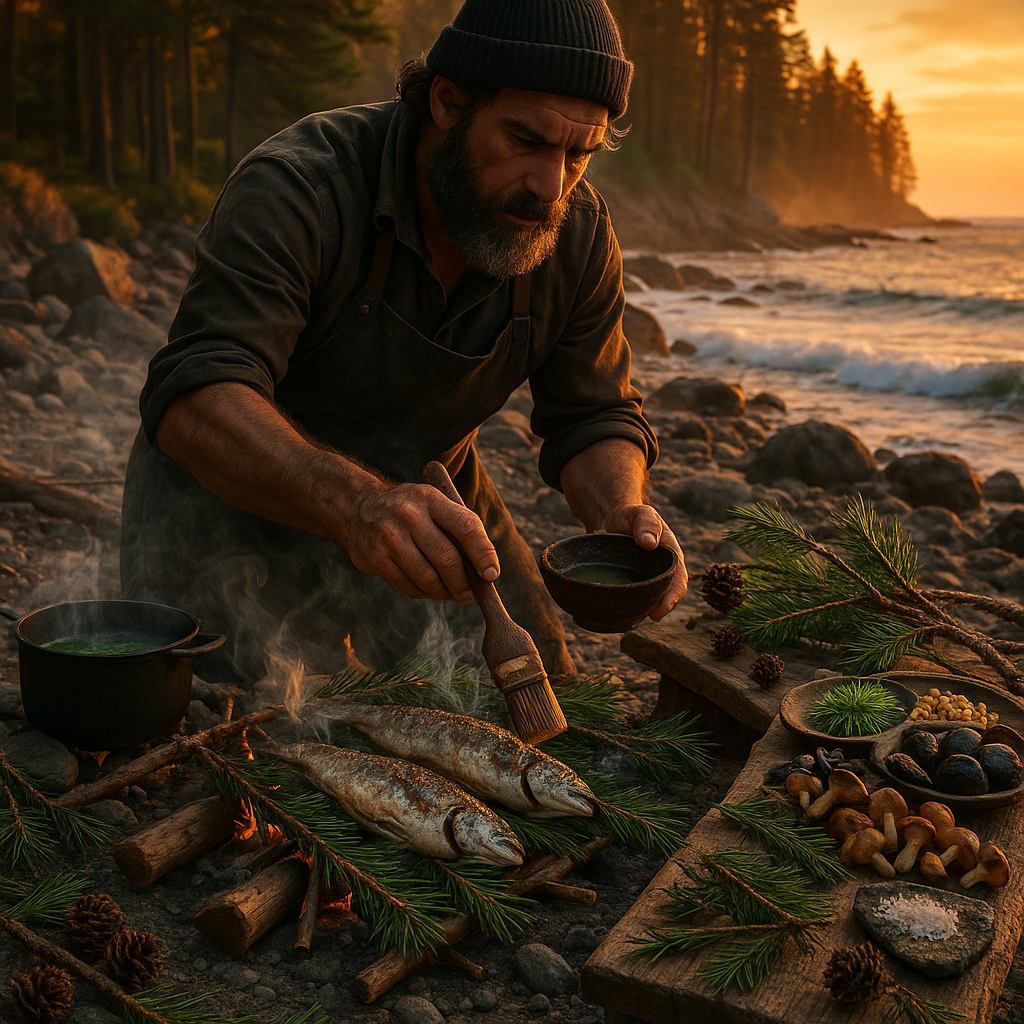
Smoking with pine embers is transformative. Scatter dried needles and small cones onto glowing coals, then rest your fish or shellfish above the fragrant smoke. Cover loosely to allow the flavors to settle. As the food cooks, it absorbs the pine’s character, forging a memory of woodsmoke and wind.
For pine-steamed shellfish, line a pot with fresh pine boughs, pour in a splash of seawater, and heap in mussels or clams. Bring to a gentle boil; the result is shellfish as pure as the landscape, wreathed in pine’s perfume.
A tradition passed down by countless generations involves wrapping whole fish in pine boughs, then roasting them in a sand pit or under coals. This not only insulates delicate flesh but ensures whisper-soft flavors, connecting every meal to the fireside rituals of those who’ve cooked on these shores before.
Pine Resin & Salt Preservation
Pine resin’s natural preservative powers have safeguarded food since ancient times. Though too strong for direct consumption, it can be carefully infused into oil or diluted spirits, then brushed onto surfaces to slow spoilage and lend a trace of wild aroma. Use this method for preserving small fish, vegetables, or root crops when provisions must last beyond the day’s catch.
These preservation techniques, along with salt-packed marine herbs, allow the spirit of the coastal forest to be enjoyed weeks or months later, long after the campfire embers have faded.
Conclusion
Pine sea cooking stands as an invitation to discover food at its source. It’s a celebration of the restless edge where pine forests intertwine with wind-whipped tides. More than a culinary method, it is a way of honoring place, memory, and the raw magic found where the outdoors becomes your kitchen.
Foragers and cooks who embrace these traditions become storytellers, carrying forward the wisdom of those who lived by the rhythms of land and sea. Each meal is an act of gratitude, connecting us with the wild abundance that shaped human curiosity and creativity for generations.
In a world that often races forward, pine sea cooking offers a soulful pause: meals made with bare hands, over open flame, with the roaring surf and whispering needles as company. For those brave enough to step outside convenience and into adventure, every feast becomes a living testament—a flavor memory, a celebration of food, fire, and freedom. Looking to the future, those willing to adapt, to listen to nature, and to cook with intention will continue to rediscover the profound joy in simple ingredients, wild landscapes, and the stories only found around a crackling fire beneath a canopy of stars.


Leave a Reply