

Key Takeaways
-
Resourceful lids preserve both heat and spirit. Using natural finds like flat stones, bark, or even leaves helps trap heat and moisture, creating richer flavors and letting you experience the crackle of food truly embraced by open air.
-
Nature-inspired solutions awaken your inner explorer. When traditional kitchen tools are out of reach, the wilderness offers creative alternatives (think cast-off pie tins, clean driftwood planks, or even a bandana), sparking playful problem-solving that forges a stronger connection to your surroundings.
-
Improvisation adds depth to the feast’s story. The quirks and quick fixes, such as covering a skillet with a pan, folding foil, or shaping clay into a lid, become part of your meal’s memory, adding character and a sense of accomplishment to every bite.
-
Environmental respect shapes every choice. Choosing non-toxic, biodegradable materials and returning found objects to their place honors the land that hosts your fires, ensuring future meals under the stars remain possible for all.
-
Makeshift doesn’t mean makeshift flavor. Clever lids do more than cover. They intensify smoke, meld spices, and amplify the rich scents of wild-cooked food, proving that adventure and culinary delight go hand-in-hand.
Improvisation is at the heart of wild feasting, where every creative cooking hack becomes a treasured story to share around the fire. Let’s step into the inspired world of makeshift lids, where necessity, nature, and flavor unite beneath the open sky.
Introduction
A missing lid can transform a quiet campfire supper into a spark of creativity waiting to ignite. In the wild, where polished kitchen gear rarely tags along, the need to cover a simmering pot invites you to become an explorer in your own adventure, discovering potential in every flat stone, bark scrap, or battered bandana.
Makeshift cooking lids offer far more than just heat retention. They shape the narrative of your outdoor feast, infusing resourcefulness into both the flavors and the memories you create. Each inventive solution, whether nature-sourced or crafted from repurposed odds and ends, becomes a testament to your deepening bond with the landscape. It is this blend of ingenuity and respect for the land that transforms a simple meal into an authentic experience. Embark on the art of wild lids, where resourcefulness, flavor, and nature find harmony over an open flame.
Why Improvised Lids Matter in the Wild
The dance of flames beneath your camp cookware kindles a primal connection to our ancestors, offering a taste of life lived closer to earth and sky. However, in the absence of a proper lid, what might be a harmonious union with nature can quickly turn into frustration. Left uncovered, meals cook unevenly, lose precious heat and moisture, and become magnets for the windblown ash and curious insects that inevitably find a feast in the wild.
Stay Sharp. Stay Ahead.
Join our Telegram Channel for exclusive content, real insights,
engage with us and other members and get access to
insider updates, early news and top insights.
 Join the Channel
In the backcountry, a missing lid is not simply an inconvenience; it deeply affects both your cooking process and the quality of your meal. Unchecked heat escapes upward, resulting in longer cooking times, wasted fuel, and tougher food. The difference between a covered and uncovered pot can mean waiting an extra hour for your meal as essential steam and flavor floats into the thin mountain air.
Practicality aside, makeshift cooking lids perform an equally important defensive role. They shield carefully prepared dishes from pine needles fluttering down with the breeze, swirling ash from the fire, and pesky insects drawn to the alluring scent of slow-cooked food. As weather and surroundings shift unpredictably, a quick-thinking cook equipped with a makeshift cover can preserve a meal’s integrity, even against nature’s surprises.
Perhaps the most compelling aspect of mastering improvised lids lies in the powerful sense of self-reliance it bestows. Every clever solution means one less specialized gadget to carry, freeing you from dependence on manufactured gear. There is a quiet, profound satisfaction in crafting something functional from what nature and minimal supplies provide. This ability stirs an ancient resourcefulness, connecting you to generations that once faced the very same challenges at their hearths beneath the open sky.
Ultimately, the need for improvised lids rekindles the timeless tradition of adapting and thriving within the wild. As you explore these creative solutions, you become part of a story stretching far beyond your own campfire—a living thread that ties us all to the enduring art of outdoor living.
Natural Materials as Cooking Lids
Transitioning from the necessity of improvisation, it’s time to discover how nature itself can provide some of the most effective lids, blending tradition with innovation in every meal.
Stone and Rock Solutions
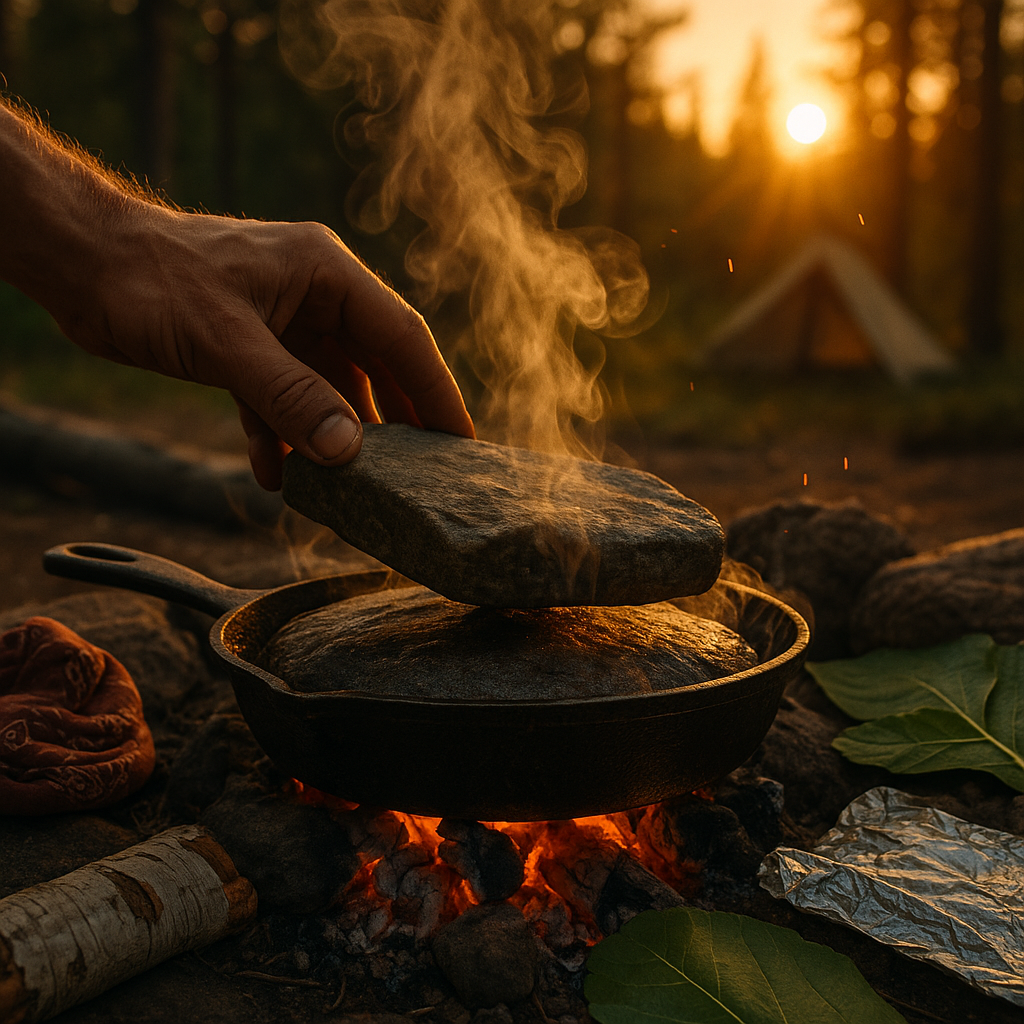
Flat stones, long revered by various cultures as reliable cookware, remain among the sturdiest and most naturally effective lid options. Seek a rock with a flat bottom and sufficient breadth to cover your pot. Clean it thoroughly and pre-heat it gradually beside the fire to avoid thermal shock and to kill any lingering bacteria. This preheating turns the stone into a heat contributor, warming your meal from above while your fire works below.
The stone’s thermal mass essentially creates a tiny oven. That’s a boon for baking bannock, crisping biscuits, or roasting wild-caught game. By radiating heat downward in tandem with the fire’s rising warmth, your food cooks more evenly and more deeply infuses flavors.
Exercise caution: Avoid stones gathered from rivers or lakes, as trapped moisture can cause them to burst when heated. Likewise, skip porous or layered rocks that might break apart in the fire. Focus instead on dense, solid stones like granite or basalt.
Selecting the right stone becomes a rewarding skill drawn from observation and experience, deepening your engagement with the wild terrain.
Leaves and Natural Wrappings
When lightweight, biodegradable covers are called for, look to large, nontoxic leaves like banana, grape, or corn husk. Found in many environments, these leaves have the advantage of being broad and sturdy, often with naturally water-repellent surfaces. Familiarize yourself with the edible and safe varieties native to your campsite.
For best results, overlap several leaves to create a more effective moisture barrier. Not only do these natural materials lock in heat for steaming and gentle cooking, but the subtle flavors they lend can enhance dishes with fragrant undertones. This is an unexpected reward for your inventive spirit.
In regions where such leaves are scarce, birch bark makes an excellent substitute. Its natural oils provide a degree of water resistance and heat tolerance, perfect for short cooking intervals. Just be mindful to only use already shed bark to protect living trees.
Utilizing these materials in your wilderness kitchen connects you to indigenous traditions practiced for generations, deepening your appreciation for the ecosystem. Always harvest ethically: take only what you need, use fallen or shed plant matter when possible, and return unused materials to the earth.
Repurposed Gear as Cooking Covers
Moving from natural solutions to human ingenuity, let’s delve into how everyday gear transforms into versatile cooking lids, broadening your toolkit without burdening your backpack.
Metal Equipment Adaptations
Creative campers see lids everywhere: in water bottle bases, metal plates, or even the bottom of a well-used mess kit. If you find a sturdy, heat-resistant piece of gear with an appropriate circumference, invert or lay it over your pot for an instant seal.
Unexpected but effective substitutes include using the base of a canteen cup, the head of a camp shovel, or a metal compass back (wrapped for safety, of course). Nesting a smaller cast iron skillet atop a larger one is another excellent trick, creating a primitive Dutch oven ideal for baking and slow-cooked stews. The upper pan’s heft delivers a tight seal and makes for easy handling.
Metal’s resilience and ability to withstand direct flame allow for long, high-temperature cooks where other materials would falter. This durability ensures your meal remains safely protected, even during epic all-night campfire stews or smoky riverside fish roasts.
Stay Sharp. Stay Ahead.
Join our Telegram Channel for exclusive content, real insights,
engage with us and other members and get access to
insider updates, early news and top insights.
Join the Channel
Fabric and Bandana Techniques
Sometimes, a simple piece of fabric (like a bandana or cotton cloth) can become a surprisingly effective lid. Fold it into several layers to give it thickness, then drape over your vessel, securing with sticks, rocks, or twine if needed.
This lightweight method keeps bugs, dirt, and debris at bay, especially during the crucial minutes when food is resting or being kept warm. For added protection, dampen the cloth before placement, enhancing the seal while helping to shield fabric from direct heat damage.
Combine fabric with aluminum foil for longer cooking sessions. The cloth creates a flexible, custom fit while the foil locks in moisture and heat. Many traditional cooking cultures (from Asian steamed buns to rustic bread proofing) embrace variations on this technique. It serves as a gentle reminder that sometimes the simplest coverings can best protect a meal’s soul.
Aluminum Foil: The Versatile Wilderness Lid
Expanding the range of ingenuity, aluminum foil emerges as an essential ally for outdoor cooks. It’s lightweight, adaptable, and endlessly reusable.
Creative Foil Forming Techniques
Foil’s flexibility means it conforms perfectly to nearly any cooking vessel. Use a large enough piece to generously overlap your pot’s opening, pressing it taut and crimping the edges for a solid seal that traps heat and steam.
Doubling or tripling the foil thickens your makeshift lid, providing insulation and safeguarding against accidental tears. Consider creating a small tab for easy lifting, so you can check your progress without upsetting your entire setup.
Advanced methods involve fashioning a domed lid, offering extra headspace for foods that rise while cooking or for reducing unwanted condensation on delicate dishes such as fish or freshly baked bread. The “foil collar” trick, achieved by twisting a thick ring of foil around the rim before adding your cover, provides structural stability and an even tighter seal.
Foil as Multi-Purpose Cooking Aid
The applications of foil stretch beyond mere covering. Create a funnel lid by shaping foil to channel and control the release of steam, especially when simmering stews you want to thicken slightly without drying out.
For baking, use a reflective foil tent above your dish. This directs radiant heat downward, encouraging browning and keeping breads or desserts wonderfully tender on the inside. Adjusting the space between foil and food allows for nuanced control over browning and moisture. This opens the door to bakery-worthy results even in the wild.
Well-wrapped foil packets (sealed and placed right in the coals) mimic a primitive pressure cooker, intensifying flavors and dramatically reducing cooking times. This method is a favorite for root vegetables, whole fish, or even savory dumplings.
Foil’s utility isn’t limited by environment. In healthcare relief efforts, foil often serves as makeshift cooking shields or sterilization wrappers. In educational settings, outdoor science camps use foil’s properties to teach effective heat management and inventiveness under pressure. The adaptability of foil illustrates how a single material, chosen for its flexibility and reliability, can answer countless challenges in wildly different contexts.
Beyond the Basics: Improvisation Across Environments
Improvisational cooking bridges worlds. It merges necessity with creativity, whether atop a snow-swept mountain, deep in a foggy forest, or along the sun-dappled edges of a city park. While wilderness adventurers benefit daily from these skills, the resourceful mindset applies across lifestyles and industries.
- In healthcare, field medics repurpose sterile medical packaging as cooking covers in emergency situations to maintain hygiene and temperature during critical relief operations.
- In finance and disaster relief, resourceful improvisation (such as using thermal blankets or even emergency portfolios as protective barriers) preserves resources and protects assets in unpredictable environments.
- In education, outdoor schools inspire creative thinking by challenging students to solve real-world problems, from building effective solar ovens to making weatherproof meal covers from everyday supplies.
- Environmental scientists, striving to minimize their impact, use only biodegradable or reusable coverings (like heat-treated bamboo mats or layered palm leaves) during remote field studies, modeling best practices for sustainability.
Improvised lids in the wild, therefore, are more than one-off fixes. They serve as one thread in a tapestry of creative, respectful, and adaptive living. It’s an ethos as relevant to business, science, and education as it is to the communal heart of a campfire meal.
Conclusion
Improvised cooking lids in the wild stand as a tribute to creative self-reliance and respect for place-based culinary traditions. Each time you warm a stone atop your stew, weave together fragrant leaves, or shape a resilient cover from aluminum foil, you do more than preserve heat and flavor. You pay homage to an ancient rhythm of adaptability and discovery.
In a world awash with gear and endless options, the moments that linger are often those shaped by necessity, authenticity, and the ingenuity to see opportunity in what surrounds you. Wild cooking asks us to slow down, to wonder, and to remember that adventure is inseparable from resourcefulness. Every fireside meal becomes a story told in crackling logs, smoky air, and flavors amplified by the spirit of the land.
Looking ahead, those who choose to cook beyond the beaten path, weaving together tradition, creativity, and environmental respect, will set the tone for future generations of explorers. Whether your next lid is stone, leaf, fabric, or foil, know that these moments of inspired improvisation are what transform a meal into a memory. The future belongs to those bold enough to craft the extraordinary from the elemental. To embrace food, fire, and freedom wherever their journey leads.

Leave a Reply