

Key Takeaways
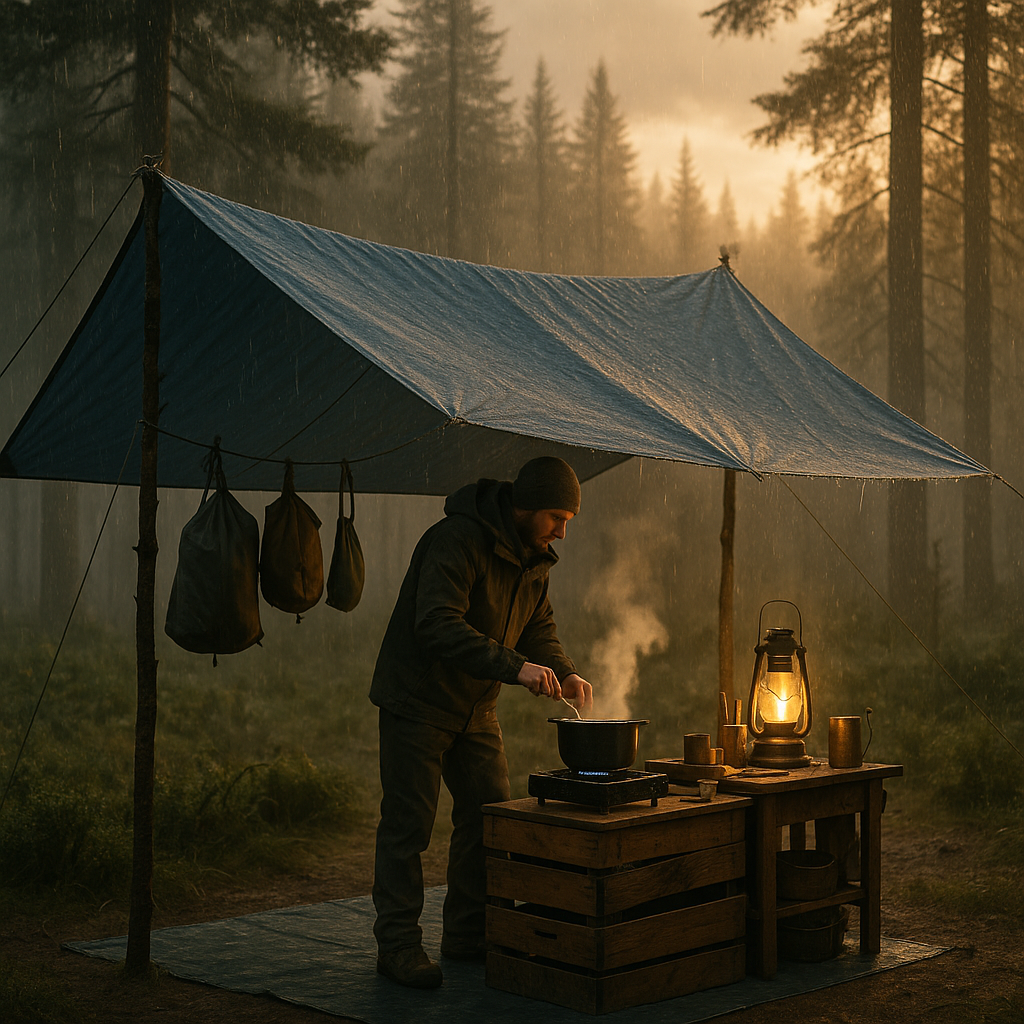
- Reimagine shelter gear as your kitchen’s backbone: Think beyond traditional tents. Tarps and rain flies can serve as adaptive work surfaces and weather barriers, transforming into flexible, protective spaces for cooking, even when rain blows sideways and clouds roll in.
- Separate your sleeping and cooking zones for safety and comfort: Create a distinct kitchen shelter away from your tent to prevent lingering food smells, accidental spills, and critter visits. This setup not only enhances safety and cleanliness but also fosters a social, campfire atmosphere around your outdoor galley.
- Harness tarps and awnings for dependable cover: A properly staked tarp turns untamed ground into a dry, open-air kitchen. This essential layer guards both cooks and ingredients from rain, dew, and harsh sunlight, letting you focus on creating memorable meals rather than dodging the elements.
- Organize like a seasoned trail chef: Keep your kitchen essentials dry and accessible using dry bags, chuck boxes, or hanging pouches. Smart organization means you’re never rifling through a sodden pack for a lighter as storm clouds gather overhead.
- Choose materials with grit and adaptability: Select ripstop nylon, silicone-coated fabrics, as well as rugged grommets or clips. These materials transform your shelter into a resilient kitchen stronghold, capable of weathering sudden downpours or unpredictable gusts.
- Stay flexible as conditions change: Build adaptability into your setup with adjustable ridge-lines and modular side panels. This ensures your camp kitchen remains usable as the sun shifts, a breeze picks up, or a squall descends, helping you chase sunlight or shelter your stove as needed.
- Let your camp kitchen become part of nature’s story: Don’t just survive the elements; welcome them. A thoughtfully weatherproofed kitchen lets you savor the patter of rain on canvas, the smoky aroma from your fire, and the joy of sharing food where earth and sky meet.
Settle in as we guide you through transforming basic shelter gear into a wild-weather kitchen, proving that true adventure cooking isn’t just about braving the storm, but learning to dance with it, one fireside feast at a time.
Introduction
Rain tapping on canvas, the scent of pine in the air, and a flickering campfire: these are the sensory gifts of wilderness cooking. Yet, with damp matches or a soggy pack of noodles, dreams of backcountry cuisine can quickly fade into survival-mode rations. The secret to elevating a simple campsite into a dependable, weatherproof outdoor kitchen lies not in hauling extra equipment, but in reimagining every tarp, rope, and awning as a core component of your culinary toolkit.
Crafting a thoughtful tent-to-kitchen setup turns meal preparation into another reason to welcome unpredictable skies. By making clever adjustments and harnessing your shelter essentials, you can curate a kitchen space that keeps food dry, spirits high, and flavors adventurous, come rain, sun, or swirling mist. Together, let’s step into the heart of designing a camp galley that thrives as much as you do in the wild’s ever-changing moods.
Understanding the Importance of Shelter for Your Camp Kitchen
As nature beckons and clouds gather, your tent-to-kitchen setup becomes the lifeline between a satisfying feast and a soggy scramble for snacks. A well-designed camp kitchen shelter is more than just a barrier against rain; it serves as an anchor point for connection, laughter, and shared memories, all nestled in the great outdoors.
Stay Sharp. Stay Ahead.
Join our Telegram Channel for exclusive content, real insights,
engage with us and other members and get access to
insider updates, early news and top insights.
 Join the Channel
Distinct from your sleeping tent, the kitchen shelter must handle movement, fluctuating heat, and multiple cooks, while resisting wind and the occasional curious woodland visitor. When this space is planned with intention and care, outdoor cooking transforms from a rushed necessity to a highlight of your wilderness experience. It becomes a place for morning rituals, fireside feasts, and the retelling of day’s adventures.
Too often, campers treat the cooking area as an afterthought, only to find themselves hunched under a flapping tarp as rain spawns pools of mud where supper should be served. If you approach this space with the same forethought as your sleeping quarters, you create an oasis. One that keeps spirits and ingredients safe, regardless of what the weather throws your way.
Weather in wild places is famously fickle, and adaptability is essential. A successful shelter system not only offers robust protection when storms break but is airy and welcoming when the sky stretches blue. This balance (openness in sunlight, security in rain) is the hallmark of a truly outstanding tent-to-kitchen design.
Essential Components of a Weatherproof Kitchen Shelter
Overhead Protection Systems
A resilient overhead shelter forms the backbone of any outdoor kitchen. While specialty kitchen tents are available, many veteran adventurers favor versatile tarp systems, which can be adapted on the fly for different weather conditions.
A standard 12′ x 12′ silnylon tarp provides excellent coverage, is light enough to carry far from the trailhead, and packs small. Prioritize tarps with reinforced corners and multiple tie-out points, as these let you create peak-roofed sheds that whisk water away or flat ceilings that maximize headroom as conditions allow.
Integrated shelters, such as the REI Co-op Screen House or the robust Pahaque Cottonwood Kitchen, offer full standing room and bug screening. These are excellent for established sites used by larger groups. However, they may not be practical for weight-conscious expeditions or rugged, off-trail adventures.
For ultimate resilience, use a layered approach. A main shelter (your tarp, rain fly, or awning) provides the primary barrier. Above your cooking surface, install a secondary, heat-resistant shield to defend against rising heat and stray sparks, preserving your main setup for seasons to come.
Side Protection and Wind Breaks
The experience of outdoor cooking is as vulnerable to wind as it is to rain. Precision heat control, flame stability, and comfort all depend on your ability to shape the wind’s path through your camp kitchen.
Modular side panels made of lightweight ripstop nylon can be lashed to your shelter using cord and toggles, forming instant removable walls. Install the first on the windy side, adding or removing panels as weather demands. This system lets the kitchen breathe under sunny skies, then seal tight if the forecast turns.
Natural features are invaluable allies. Positioning your kitchen with a rock wall, dense shrubbery, or even your vehicle at its back both shields from gusts and reflects heat into your workspace. It’s a subtle detail that transforms chilly meal prep into a cozier affair.
For added flexibility, modular commercial windscreens (such as those used for portable stoves) can create a tailored windbreak. Many trail cooks carry collapsible aluminum or heavy-duty fabric panels, which can be quickly arranged to meet shifting conditions.
Flooring Solutions that Withstand the Elements
The ground beneath your kitchen often determines whether your shelter succeeds. Steady drizzle, heavy dew, and uneven terrain can all undermine even the most meticulously pitched overhead cover.
Begin with a durable ground cloth made of woven polypropylene or coated nylon, which sheds water and provides a clean, stable surface for your food prep and cooking area. Reinforced grommets allow you to stake the cloth in place, avoiding windblown corners or creeping puddles that can turn kitchens to quagmires.
On longer journeys, consider elevating your setup. Interlocking foam tiles offer insulation and comfort underfoot, transforming rough ground into a level, dry prep zone. These tiles also facilitate drainage, keeping water out of your working area during sustained storms.
For maximum versatility, combine a waterproof ground tarp with a roll-up slat mat made from wood or plastic. This configuration allows spilled water or debris to fall away, preserving a pleasant and sanitary cooking environment even after hours of standing rain.
With these foundational layers (overhead, side protection, and solid ground), you ensure your energy stays focused on meal-making, camaraderie, and the wild rhythms all around you.
Stay Sharp. Stay Ahead.
Join our Telegram Channel for exclusive content, real insights,
engage with us and other members and get access to
insider updates, early news and top insights.
Join the Channel
Tarp and Awning Configurations for Different Conditions
Rain-Shedding Setups for Wet Weather
When dark clouds move in, your shelter needs more than basic coverage; it must actively channel water away from every meal and tool. The A-frame tarp configuration is a classic for good reason. Its steeply pitched sides send rain cascading away rather than pooling overhead or dripping down your back.
For greater adaptability, especially in shifting or heavy weather, experiment with the “flying diamond” setup. Supported by a central pole, with corners angled and tensioned at different heights, this pattern quickly dispatches water while maintaining key headroom above your stove or prep table. Point the lowest corner into the prevailing wind to create a natural gutter that diverts runoff away from your supplies.
In ongoing storms, go one step further with a two-layer system. Hang your main tarp high and steep, then install a smaller, secondary tarp nearer the kitchen surface. This air gap reduces condensation (the hidden menace of damp shelters), even as it doubles your rain protection where it matters most.
Your approach shouldn’t end overhead. Simple strategies like shallow drainage ditches around the kitchen’s perimeter redirect runoff, keeping your foundation firm and dry. This time-tested solution remains vital for any cookout stretching into a rainswept night.
Wind-Resistant Configurations for Exposed Areas
Rugged landscapes mean wind is often your fiercest challenge. Here, stability beats size, and lower setups outlast sprawling tarps that become sails in the gale. The lean-to configuration, pitched low toward the wind and raised just enough for comfort, delivers superb resistance against sudden gusts.
When staking alone won’t hold, trade paracord for substance. Use rocks, logs, or weighted stuff sacks to secure key points, providing anchorage even as strong winds threaten to lift lighter shelter materials.
For consistently strong winds, consider the “fortress” arrangement. Here, a three-sided enclosure shields your kitchen from direct and cross-breezes, leaving an open face for access while minimizing flame disruption and the risk of supplies blowing away. Tighten guy lines, tension panels until taut, and continually monitor for slack. In windy country, rigidity is your most reliable defense against the elements.
Sun Protection Setups for Hot, Clear Days
Even in cloudless weather, a camp kitchen faces a new challenge: direct sun, which can sap energy and spoil food if left unchecked. A high, airy setup maintains shade while inviting breezes to cool workspace and cooks alike.
First, track the sun’s arc and orient your covering to cast the most shade during peak prepping hours. Consider rigs with adjustable heights or movable tie-downs to chase the sun as it shifts, ensuring consistent cover morning to twilight.
Where UV is intense, seek out reflective or UV-blocking tarp materials instead of conventional cloth. These specialized shades, popular in desert or alpine camps, reduce sunburn risk and prevent perishable food from overheating, letting kitchen activity become a welcome retreat from midday glare.
These configurations empower you to build the right kitchen for any adventure, from mountain ridgelines to lakeside glens and desert flats. No weather stands between you and your next fire-cooked feast; it just inspires a more creative shelter solution.
Real-World Applications Across Diverse Adventures
The principles of camp kitchen shelter design find echoes far beyond the wild campsite. In community disaster response settings, deploying modular tarps and ground covers creates reliable food distribution points when infrastructure fails. Outdoor educators and youth programs use similar setups to teach group coordination and respect for nature’s power, making every meal an opportunity for learning and growth.
In urban rooftop gardens, adaptable awnings and side panels provide event-ready spaces for farm-to-table dinners, blending city life with the tactile pleasures of al fresco cooking. Photographers and field researchers across the sciences rely on portable shelter systems to keep sensitive electronics or ingredients dry and accessible, proving that the right gear bridges the divide between wilderness and daily reality.
Even in entirely different arenas (like healthcare outposts, festival kitchens, or wildlife research bases), the core ideas endure: plan for the unknown, build for comfort, and create space for connection, no matter what sky or season you face.
Conclusion
A thoughtfully built tent-to-kitchen setup is the heartbeat of every truly memorable outdoor meal, transforming obstacles into comfort and a simple recipe into communion beneath open skies. By layering versatile tarps for overhead protection, anchoring sturdy windbreaks, and choosing reliable ground solutions, you ensure your camp kitchen is always ready, whether the weather invites calm or chaos.
But this approach offers more than protection; it honors the deep ritual of cooking in nature. Here, you gather not just beneath shelter, but under a philosophy: resilience, intention, and the conviction that every meal, no matter how wild the wind or relentless the rain, can be a celebration.
Looking ahead, the art of sheltering your outdoor kitchen will only grow more dynamic as adventure communities innovate with lighter, more sustainable materials and embrace new strategies from both ancestral wisdom and modern design. Those who embrace adaptability, not simply braving the elements but learning from them, will savor a richness that reaches beyond flavor into memory and meaning.
As the sky shifts and wild places summon their fiercest beauty, let your kitchen become an invitation. Draw fellow wanderers close, share fire-cooked fare, and let every sound of rain or crackle of flame flavor your feast. The world’s raw beauty is waiting. Your shelter is ready. And the story you build around the fire will outlast even the wildest weather.

Leave a Reply